Birds along the River Corran in Laugharne

Birds of the Corran
As swallows gather on wires and the joyful trilling of greenfinches continues unabated, it really is a good time to count our blessings. This spring and summer, with the help of the excellent Merlin app, I’ve been counting birds.
This has resulted in large spreadsheets indicating what’s been ‘heard’ by Merlin and seen/heard by me. I take our old dog for a slow walk or my daughter’s much sprightlier hound for a longer one. Either way, I’ve been spending more than an hour a day on “The Lane” - better known as Horsepool Road - which (roughly) follows the route of the upper reaches of the River Corran. The shorter, old-dog walks often only go as far as Jackie’s Hill’s Farm stables. The long ones take in Glancorran Farm and, sometimes, the boundary of Abercorran.

The landscape is varied; from dense, wet woodland, to large, slopey, close-cropped sheep fields, as well as horses and 20+ acres of maize.
The results of these Travels With My App are equally varied and rich.
Red-listed
The latest Wales Birds of Conservation Concern report puts 60 species on the ‘Red List’, due to significant declines in their population. The list has doubled in length in 20 years and research shows more than one in four birds in Wales are now in serious trouble.
It is not easy to halt decline. A good example is the red kite which moved from the red list to ‘green’ (indicating a healthy population) in recent analysis. This, though, follows nearly a century of conservation work - including red kite chicks from Spain and Sweden being released in the UK in the 80s and 90s.
Incidentally, chicks from these isles were - in 2025 - used to rescue the persecuted population of red kites in Spain.
Red kites are regular visitors to the Corran valley, along with buzzards and the occasional (red listed) kestrel which are seen and ‘heard’ hunting in the landscape. The presence of these apex-predator raptors are a very good sign that all is well with the food chain.
Also reassuring is the presence of innumerable magpies and plenty of noisy jays, who - in true corvid style - like nothing more than raiding songbird nests for their eggs and nestlings.
Not reassuring for the songbirds, of course, but zoom out a bit and feel encouraged.
Rooks and other rarities
It is good to hear rooks and ravens. It will seem counter-intuitive to anyone living in the Lacques or walking on ‘Stoney Way’ that rooks are red listed. For the record, the rook has bypassed the ‘amber’ list and jumped straight from green to red.
Examining the Wales red list reveals that 22 of the 60 imperiled species are to be found in and around Horsepool Road. Bearing in mind a lot of the list refers to dwindling populations of seabirds, this is quite a haul.
Some, though, look like they might just be statistical anomalies: I recorded a yellowhammer just once (on June 11), a pied flycatcher twice, a grasshopper warbler on just two days in April, and a meadow pipit three times. All these birds are red-listed.
Other red listers were pretty infrequent, too: cuckoo, curlew, dunlin, grey plover, redshank and ringed plover all scoring below half a dozen hits across the four-month study.
Some are surprising for a very different reason. The red-listed goldcrest was a regular companion on my walks, failing to register a ‘hit’ on just a single day in May, June and July and often seen flitting around the edge of the damp woodland catching flies in March and April before the trees leafed up.
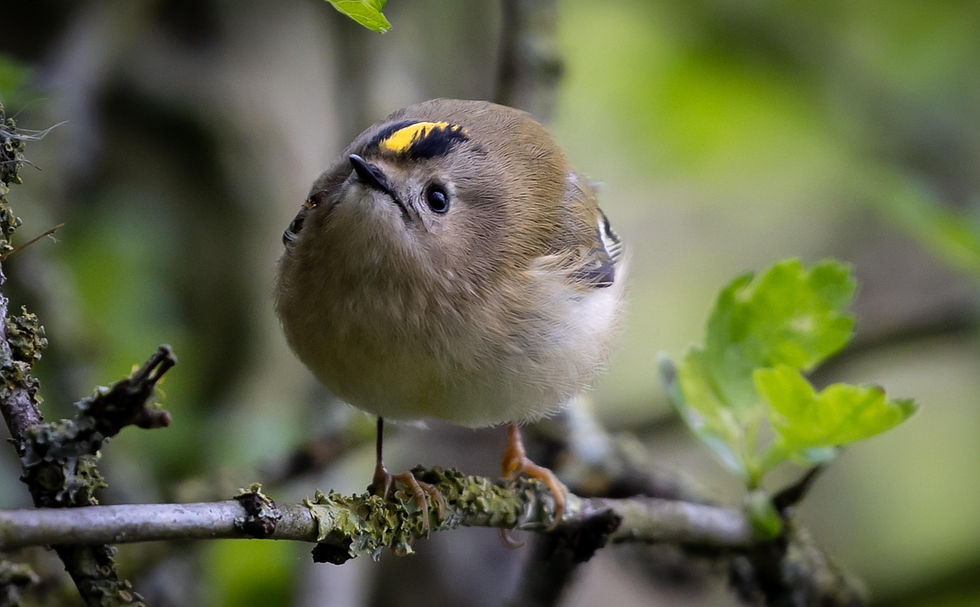
Greenfinches, too, were in abundance as well as being perma-visitors to our garden this year.
Swift and starling are also on the red list and barely featured in my study but some red listers were abundant: linnet, spotted flycatcher and willow warbler all appeared more often than not.
And it was quite the thrill to hear a marsh tit (on 11 occasions in April, May, June and July) considering their numbers have dropped by 50 per cent since the 70s. Despite their name, they are not solely found in marshy areas but their record here pinpointed them to the damp, woodled riverside area every time.
Treasure trove
In fact, this first bit of ‘The Lane’ - just beyond the bridge - is a true treat. You do not have to walk far to hear a treasure trove of bird song: amber-listed bullfinch, chaffinch, coal tit, dunnock, garden warbler, magpie, mistle thrush as well as green-listed favourites like blackcap, chiffchaff, great spotted woodpecker, goldfinch, long-tailed tit, nuthatch, robin, treecreeper and, of course, the joyously ever-present wren.
Further up, towards the stables and Greenhill Farm, the amber-listed house sparrow and housemartin dominate the soundscape along with scores of swallows (green list) and, as you
push on towards Milton Farm and Glancorran, you will start to hear skylark, linnet, stonechat, whitethroat and Cetti’s warbler.
Always keep an eye out for the elusive kingfisher. I cannot think of many sights that lift the spirits as much as that oh-so-fleeting flash of azure blue. As well as the fisher king, heron and egret hunt these waters and, while they make little sound, their size makes them difficult to miss.
Their presence is proof positive that the River Corran is in good health, too.

Aside from birds, the presence of rabbits, hare, water voles, shrew, deer and (an admittedly solitary sighting of) a weasel all point to this small stretch of riverside lane being vibrant and healthy when, in haste, some might see it as the preserve just of sheep and horses.
It says a lot, too, for leaving the woodland undisturbed, allowing our small river to meander and the importance of (mainly) ‘unimproved’ fields and meadows.
At the heart of it, though, is a healthy river and an abundance of trees. In the heat of this summer, the cooling shade of the trees has been as much a revelation as it has been a godsend, for a man in his sixties and his four-legged friends, young and old.
● More information on the latest review of the conservation status of birds in Wales can be found here: Birds of Conservation Concern Wales 4: the population status of birds in Wales | BTO
● The report assessed all 220 bird species which regularly occur in Wales. There are now 60 species of bird on the Red List, with 91 on the Amber List and just 69 - less than a third of the total number of species - on the Green List.
● The free-of-charge Merlin app is developed by the Cornell Lab of Ornithology, a research and conservation institution at Cornell University. It was created through a collaborative effort involving several teams of scientists, programmers and birding experts.


Comments